Step-by-Step Tree Stump Removal: What Works and What Doesn’t
Trees provide countless benefits, from clean air to mesmerizing landscapes. However, there comes a time when we must remove trees due to disease, damage or safety concerns. When this happens, the remaining tree stumps can not only be an eyesore, but also pose a tripping hazard, interfere with other trees’ growth, and become a breeding ground for pests.
So, it’s essential to deal with tree stumps promptly and effectively, that’s why we’ll be exploring the various techniques we utilize for tree stump removal, so you understand the process better and make informed decisions. Having a solid understanding of these methods will help you choose the best solution for your situation, ensuring a smooth and efficient removal process.
Ready to say goodbye to that unsightly stump? Let’s dive in and explore these techniques in detail. And if you need professional help, don’t hesitate to reach out to All Pro Huntsville Tree Service to book an appointment!
Stump Grinding: Quick and Effective
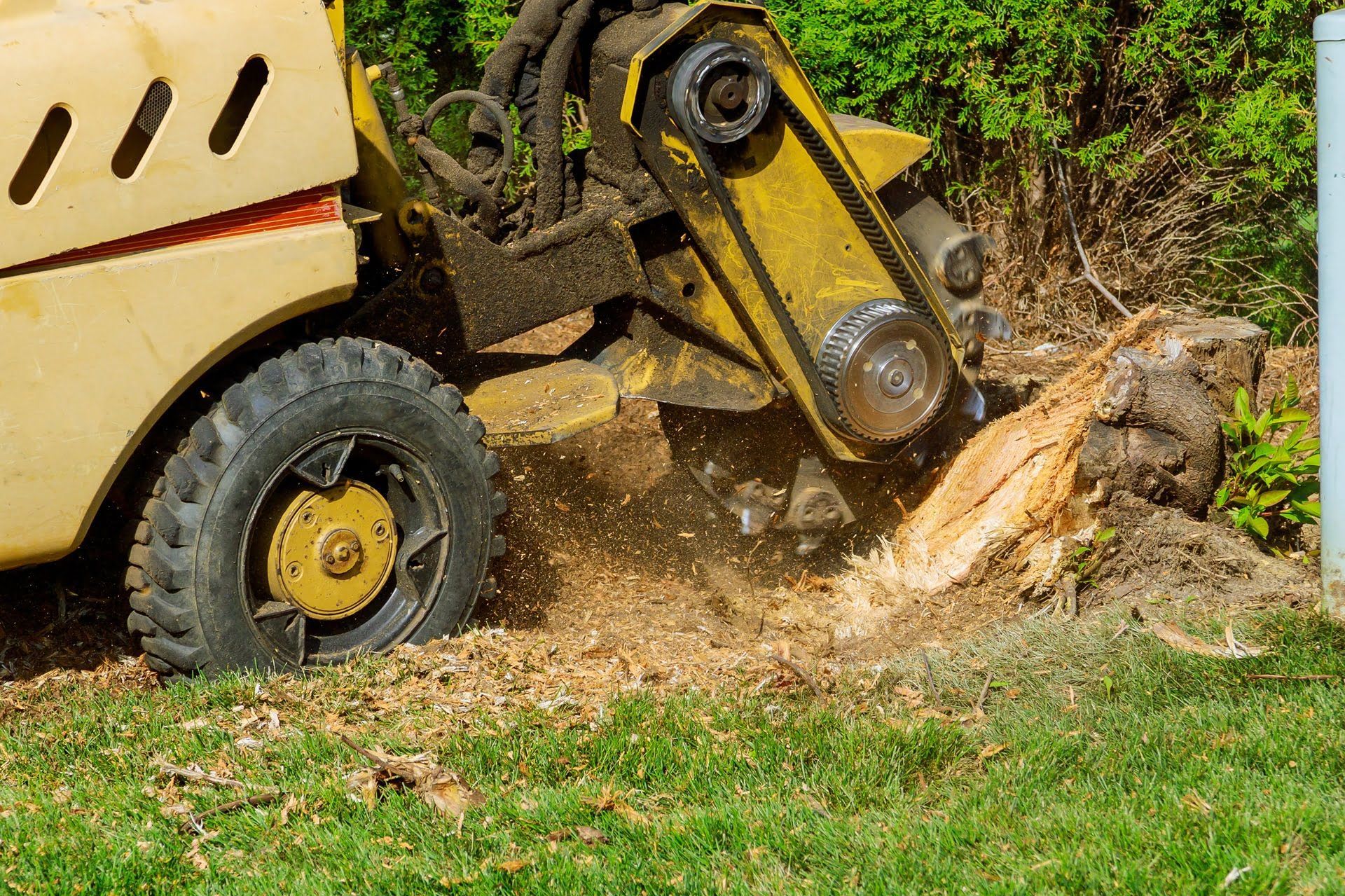
Stump grinding is one of the most popular and effective methods for tree stump removal. Our professional team uses a specialized stump grinder machine equipped with a circular cutting disk that chips away at the wood. The grinder’s powerful engine rotates the cutting disk rapidly, grinding the stump into small, manageable wood chips. These chips can then be used as mulch, saving you money on landscape materials.
There are various types of stump grinders available on the market, ranging from small, portable models to larger, equipment-mounted versions. The choice of grinder depends on factors such as the size of the stump, access to the area, and soil conditions. Our expert technicians will assess your specific situation and choose the most appropriate grinder to safely and efficiently complete the task.
To ensure a successful stump grinding project, our team adheres to the following steps:
- Site Preparation: We begin by clearing the area around the stump, removing any debris or obstacles that might hinder the grinding process.
- Safety Measures: We establish a safety perimeter and, if necessary, install protective screens to contain flying wood chips and debris.
- Grinding: Starting at the edge of the stump, we gradually work our way inward, grinding the stump down to a depth of approximately six to eight inches below ground level.
- Cleanup: Finally, we fill the hole with soil, remove the excess wood chips, and leave your property clean and ready for use.
Chemical Stump Removal: A Less Invasive Option
Chemical stump removal can be a less invasive option for managing small tree stumps when traditional mechanical methods are not feasible or desired. By using chemicals, we can accelerate the natural decay process, allowing nature to break down the stump over time. This method requires patience but can be practical and cost-effective for smaller projects.
There are several chemical agents available to assist in removing tree stumps, such as potassium nitrate, which hasten the decomposition process. To use this method, we follow these steps:
- Drilling Holes: First, we drill evenly spaced holes into the stump, about 8 to 10 inches deep and no more than 3 to 4 inches apart.
- Applying the Chemicals: We then fill the holes with the chosen chemical agent, typically in dry granular form or liquid form diluted with water.
- Waiting Period: The chemicals will begin breaking down the wood fibers, but it can take several weeks or even months to see visible results. Patience is key during this slow process.
- Removal: Once the wood has softened, it can be more easily removed by breaking it apart using an ax or other implement.
It’s vital to follow safety guidelines when using chemical stump removers, as they can be harmful to humans, pets, and the environment when not used correctly. Our technicians always wear protective gear and responsibly dispose of any chemicals to prevent harmful contamination or accidental ingestion by wildlife.
Manual Stump Removal: Hands-on Solutions
Manual stump removal methods can be labor-intensive but are sometimes the most viable option for small stumps or those located in hard-to-reach areas. Some common manual techniques include:
- Digging Out the Stump: For smaller stumps, digging them out using a shovel and a mattock or a pickaxe can be a suitable option. To do this, we first expose the stump’s roots, then use the tools to cut and remove the roots from the soil.
- Stump Puller: This is a specialized tool used to pry stumps out of the ground by wrapping a chain around the stump and leveraging the tool’s power to lift and remove the stump.
- Burning: In controlled conditions and with proper safety measures, burning can be an effective method for removing tree stumps. However, this process requires careful planning, monitoring, and adherence to local regulations to prevent accidents..
Natural Stump Decomposition: Letting Nature Take Its Course
Allowing stumps to decompose naturally can be the most environmentally friendly and cost-efficient method in some circumstances. This process may take years, depending on the tree species, size, and climate conditions. However, you can speed up the decomposition process by fostering a moist environment and introducing decay-promoting fungi and insects, like mushrooms or beetles, which weaken the wood over time.
It’s important to keep the decomposing stump free from weeds, grass, and other competing vegetation, as this can negatively impact decomposition and hinder new plant growth in the area.
Choosing the Right Stump Removal Method
Tree stump removal is a necessary task to maintain safety, aesthetics, and overall tree health on your property. Understanding the various techniques—stump grinding, chemical stump removal, manual removal, and natural decomposition—will help you make an informed decision on the best option for your specific situation.
Our team at All Pro Huntsville Tree Service is here to help you with all your tree stump removal needs in Huntsville, AL. With expert advice and a range of methods available, we’re confident in our ability to safely and efficiently remove your tree stump. Contact us today to schedule a consultation, and let us assist you in restoring your yard’s beauty and functionality.
Recent Posts